5:58 Crimson | Red IPA | BeerCo All Grain Brewers Recipe Kit
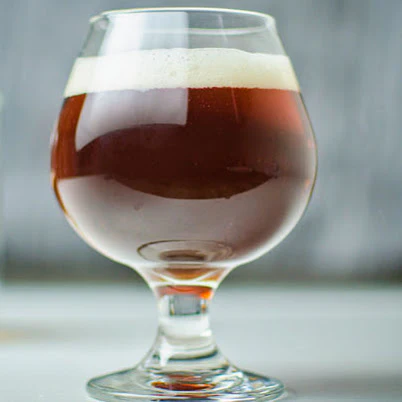
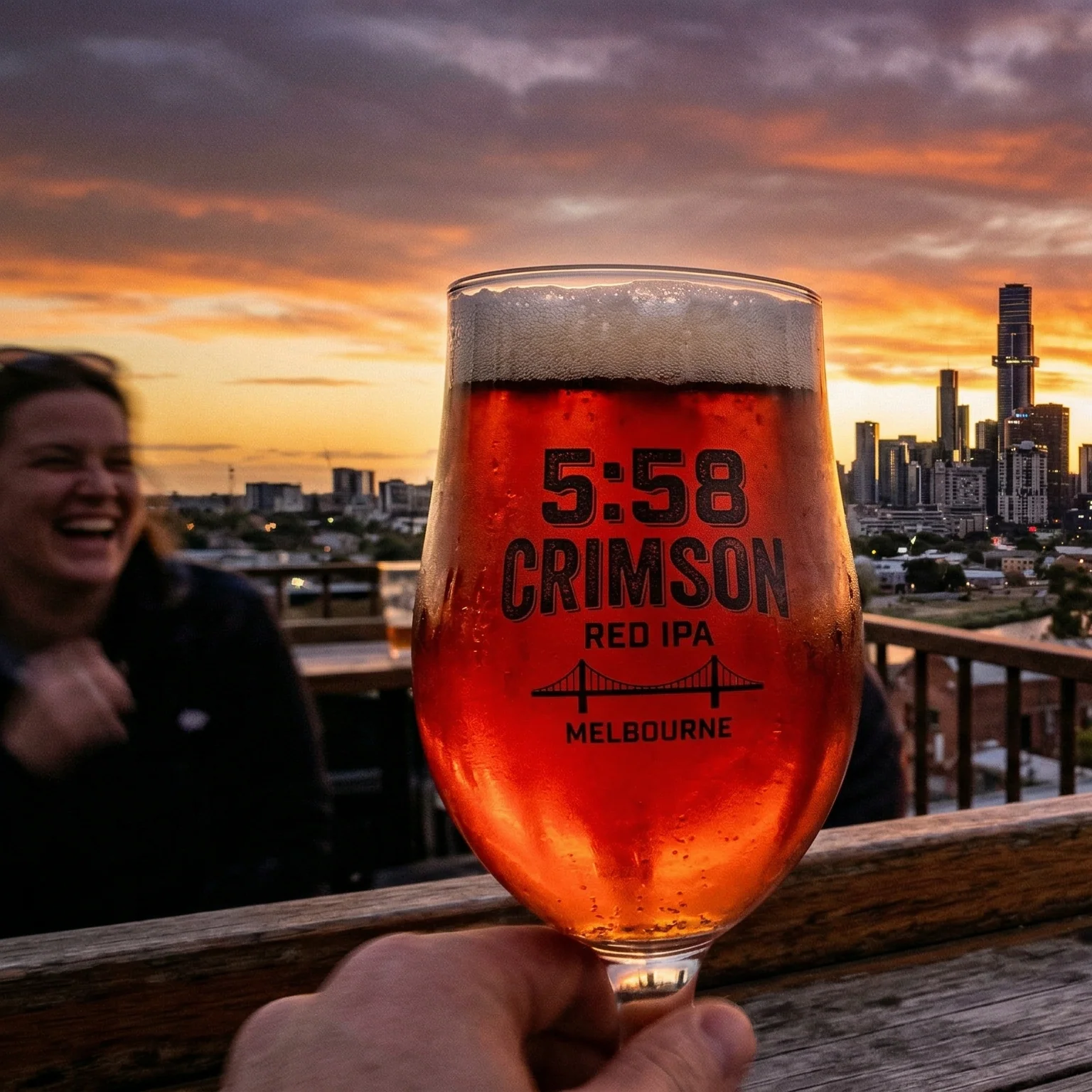
April is a magic month for a host of good reasons. The leaves start to fall; the fallen leaves are amber. The sunrises later and sets earlier around 5:58pm with an awesome red glow that lights up the sky. The temperature starts to drop. You pace of life and work start to slow and you ease towards the glow of 5:58 Crimson Red IPA. Something to Sip On. Something to Savour. No more rushing. You're all about being present in the present. The beeps and peeps can wait...pour me another 5:58 Crimson Red IPA and let me catch that beautiful sunset over the horizon. Nothing beats the full hoppy malty deep red balance. Hard to pourfect, hard to brew happy but oh so easy to enjoy responsibly!
cheers #sunsets #autumn #leaves #redipa #crimson
5:58 Crimson | Red IPA
Recipes on Brewing Software:
- Brewfather
an All Grain American Red IPA by Dermott Dowling complying with BJCP Style Guidelines 21B for Red IPA but totally inspired by my local craft brewery Red IPAs and not the lit!
Vital Stats:
- 1.058 OG
- 1.011 FG
- 59 IBU
- 32.5 EBC
- 6.2 % ABV
- BU/GU 1.01
- Batch Volume: 23L
- 60 minute boil
- Single Infusion Mash - 72% Efficiency Mash Efficiency 75%
Malt:
- 2.25 Kg Joe White Traditional Ale (38%)
- 2.25 Kg Joe White Vienna Malt (38%)
- 0.50 Kg Gladfield Shepherds Delight Malt (8%)
- 0.50 Kg Joe White Dark Munich Malt (8%)
- 0.50 Kg Gladfield Redback Malt (8%)
6.00 kg Total Grist - 100%
Hops:
Amount Hop Time Use Form AA IBU
- 25 g Chinook 60 min Boil Pellet 11% 29
- 20 g Centennial 15 min Boil Pellet 9.7% 11
- 15 g Chinook 5 min Boil Pellet 11% 5
- 15 g Simcoe 5 min Boil Pellet 14.7% 6
- 35 g Simcoe 15 min Whirlpool/Hop Stand Pellet 14.7% 6
- 25 g Centennial 15 min Whirlpool/Hop Stand Pellet 9.7% 3
- 40 g Centennial 3 days Dry Hop @Day 7 Pellet 9.7% 0
- 40 g Simcoe 3 days Dry Hop @Day 7 Pellet 14.7% 0
Yeast:
Dry | Fermentis
- Fermentis by Lesaffre | SafAle™ US-05 Yeast 2 x 11.5g Sachets or
Liquid | Bluestone Yeast
- BSY-A010 San Diego Bluestone Yeast x 1 Pitch
Aids:
Mash pH Water Adjustments: (based on our typical default GWW Water profile)
- 3g Calcium Chloride
- 1.5g Magnesium Sulphate
- 7g Calcium Sulphate (Gypsum)
Method:
1. Preparation (Day Before or Brew Day Morning)
-
Clean and Sanitize: Everything. Seriously. Sanitize your fermenter, chilling equipment, hydrometer, mash paddle, and any spoons or hoses that will touch the beer.
-
Hops Prep: Measure out all your hops into labeled containers. This hop schedule has a lot of moves; being organized is essential.
-
Water Preparation: If you are using GWW (Greater Western Water) or similar soft water, prepare your salt additions now.
-
Yeast Prep:
-
Dry (US-05): (Recommended) Remove the sachets from the fridge and allow them to come to room temperature. You can pitch them dry.
-
Liquid (A010): (Optional, but good practice) Remove from the fridge 2-4 hours before pitching. Smacking/shaking isn't always necessary for modern Bluestone pitches, but warming is.
-
2. Mashing
-
Water Calculation: Calculate your required total water volume (Strike Water + Sparge Water) based on your system and your desired 23L final batch size. (A rough estimate is around 32-35L total water).
-
Heat Strike Water: Heat your initial mash (strike) water in your mash tun to your calculated strike temperature (usually around 70-72°C) to allow it to settle to the mash target. Note: If you are Single Vessel Brewing we recommend approx 22 Litres mash water allowing 2L for your false bottom. The remaining 11 Litres will be used for the sparge post mashing.
-
Water Adjustments (Optional but Recommended): Add your salts (if using) to the strike water.
-
The Mash-In: Slowly add your 6kg of milled grain (Grist) to the hot water while stirring continuously to prevent dough balls (clumps of dry malt).
-
Target Mash Temperature: You are aiming for a stable mash temperature of 66°C (151°F) for a single infusion. This strikes the right balance between body (sweetness) and fermentability.
-
pH Check (Crucial): After 10-15 minutes of mashing, take a pH reading. For this recipe, you need a pH between 5.2 and 5.4.
-
Too High? Add small amounts (0.5ml) of 85% Lactic Acid.
-
Too Low? (Unlikely with this water/malt profile). Don't panic. If it’s below 5.2, the beer will just be slightly brighter.
-
-
The Wait: Maintain 66°C for 60 minutes.
3. Sparging and Lautering
-
Recirculate (Vorlauf): Once the mash is done, recirculate the wort (pump or gravity) back onto the grain bed for 10-15 minutes until it runs clear. This sets the filter bed.
-
Sparge: Slowly drain the sweet wort from the grain bed into your boil kettle. While doing this, gently sprinkle or flood the grain bed with your sparge water (heated to approx. 76°C) to rinse the remaining sugars. Stop sparging once you hit your desired pre-boil volume (usually ~27-28L).
4. The Boil
WARNING: Watch carefully for "boil over" when the wort first starts to foam.
-
Start the Boil: Bring your wort to a vigorous, rolling boil. Set your timer for 60 minutes.
-
Kettle Addition 1 (60 min): As soon as you hit a full boil, add 25g Chinook pellets. (This is for the heavy-duty 29 IBU bitterness).
-
Intermediate Check: Measure your pre-boil gravity (using a refractometer or hydrometer). It should be around 1.050.
-
Kettle Finings (Optional): At 15 minutes left, add Irish Moss or half a Whirlfloc tablet to help clarify the beer.
-
Kettle Addition 2 (15 min): At 15 minutes left, add 20g Centennial pellets. (This brings the first wave of grapefruit aroma and 11 IBU).
-
Kettle Addition 3 & 4 (5 min): With only 5 minutes left in the boil, add 15g Chinook AND 15g Simcoe. (These are your complex flavor and light aroma hops).
5. The Whirlpool / Hop Stand
-
End of Boil: Turn off the heat or power source to the kettle at 60 minutes.
-
Cooling to Whirlpool: If you have an immersion or plate chiller, use it now to quickly cool the wort down to roughly 80°C - 85°C. (This temperature prevents volatilizing those aromatic oils). If you don't have a chiller, just let the wort settle for a few minutes.
-
Create the Whirlpool: Using your mash paddle (vigorously in one direction for 3V system) or your pump (standard on all-in-one systems), get the wort spinning quickly.
-
Whirlpool Additions (15 min): Stop stirring/pumping. Add 35g Simcoe AND 25g Centennial.
-
Stand: Allow the wort to "stand" (rest) with these hops in the hot liquid for 15 minutes.
6. Cooling and Transfer
-
Rapid Cooling: After the 15-minute stand, quickly cool the wort as fast as possible to 18°C (64°F) using your chiller.
-
Transfer to Fermenter: Transfer the cooled wort into your sanitized fermenter. Be careful not to transfer the "trub" (hop and malt sludge) that has settled in the bottom cone of the kettle. You should end up with your target 23L.
-
Aeration: Oxygenate the wort well by rocking the fermenter vigorously for a minute. (This is critical for healthy yeast growth).
7. Fermentation
-
Check Original Gravity (OG): Take a final hydrometer reading. Your target OG is 1.058.
-
Pitch Yeast: Pitch your yeast:
-
Dry (US-05): Sprinkle 2 packets directly onto the surface of the wort.
-
Liquid (A010): Swirl the pitch can and pour the yeast directly into the wort.
-
-
Fermentation Temperature: Set your temperature controller or keep the fermenter in a cool, stable place (e.g., 18°C ambient). Maintain the fermentation temperature at 18°C–20°C.
8. Dry Hopping
-
Wait: Wait until active fermentation has visibly subsided. This is usually around Day 7 of fermentation.
-
Check SG: Confirm the beer is near FG (around 1.011) by taking a hydrometer reading.
-
Add Hops: If the SG is stable, sanitize your dry hop additions (ensure no light/dust gets in). Open the fermenter (minimizing oxygen exposure) and pour in the 40g Centennial AND 40g Simcoe.
-
Contact Time: Allow the hops to remain in contact with the beer for 3 days. (Day 7 to Day 10).
9. Packaging (Kegging)
-
Cold Crash (Recommended): If you have temperature control, drop the fermenter temperature to 1°C–3°C for 2-3 days after the dry hop time. This helps drop all the hop particles and yeast to the bottom of the fermenter, giving you much clearer beer in the keg.
-
Package: Rack (transfer) your beautiful, ruby-red beer into your sanitized 19L Corny keg, minimizing splashing.
-
Carbonate: Carbonate to 2.4 - 2.5 volumes of CO2.
Your beer will be ready to enjoy responsibly when fully carbonated! Pour yourself a pint and enjoy a 5:58 Crimson Red Sunset with your Red IPA close at hand! Prost!
Sauces of Brewspiration:
- Hop Nation | The Buzz
What’s in the box:
|
SKU |
Title |
Category |
Quantity |
|---|---|---|---|
|
2.25 Kg Joe White Traditional Ale (38%) |
Malt |
1 |
|
| USH-CHINOOK-100GM | Chinook US Hops |
Hop |
1 |
| USH-CENT-100G | Centennial US Hops |
Hop |
1 |
| USH-SIMCOE-100G | Simcoe US Hops |
Hop |
1 |
| 40719 | Fermentis by Lesaffre | SafAle™ US-05 Yeast |
Yeast - Dry* |
2 |
| BSY-A010 | BSY-A010 San Diego Bluestone Yeast |
Yeast - Liquid* |
1 |
*Indicates items included only with specific variants.
Original: $31.44
-65%$31.44
$11.00Product Information
Product Information
Shipping & Returns
Shipping & Returns
Description
April is a magic month for a host of good reasons. The leaves start to fall; the fallen leaves are amber. The sunrises later and sets earlier around 5:58pm with an awesome red glow that lights up the sky. The temperature starts to drop. You pace of life and work start to slow and you ease towards the glow of 5:58 Crimson Red IPA. Something to Sip On. Something to Savour. No more rushing. You're all about being present in the present. The beeps and peeps can wait...pour me another 5:58 Crimson Red IPA and let me catch that beautiful sunset over the horizon. Nothing beats the full hoppy malty deep red balance. Hard to pourfect, hard to brew happy but oh so easy to enjoy responsibly!
cheers #sunsets #autumn #leaves #redipa #crimson
5:58 Crimson | Red IPA
Recipes on Brewing Software:
- Brewfather
an All Grain American Red IPA by Dermott Dowling complying with BJCP Style Guidelines 21B for Red IPA but totally inspired by my local craft brewery Red IPAs and not the lit!
Vital Stats:
- 1.058 OG
- 1.011 FG
- 59 IBU
- 32.5 EBC
- 6.2 % ABV
- BU/GU 1.01
- Batch Volume: 23L
- 60 minute boil
- Single Infusion Mash - 72% Efficiency Mash Efficiency 75%
Malt:
- 2.25 Kg Joe White Traditional Ale (38%)
- 2.25 Kg Joe White Vienna Malt (38%)
- 0.50 Kg Gladfield Shepherds Delight Malt (8%)
- 0.50 Kg Joe White Dark Munich Malt (8%)
- 0.50 Kg Gladfield Redback Malt (8%)
6.00 kg Total Grist - 100%
Hops:
Amount Hop Time Use Form AA IBU
- 25 g Chinook 60 min Boil Pellet 11% 29
- 20 g Centennial 15 min Boil Pellet 9.7% 11
- 15 g Chinook 5 min Boil Pellet 11% 5
- 15 g Simcoe 5 min Boil Pellet 14.7% 6
- 35 g Simcoe 15 min Whirlpool/Hop Stand Pellet 14.7% 6
- 25 g Centennial 15 min Whirlpool/Hop Stand Pellet 9.7% 3
- 40 g Centennial 3 days Dry Hop @Day 7 Pellet 9.7% 0
- 40 g Simcoe 3 days Dry Hop @Day 7 Pellet 14.7% 0
Yeast:
Dry | Fermentis
- Fermentis by Lesaffre | SafAle™ US-05 Yeast 2 x 11.5g Sachets or
Liquid | Bluestone Yeast
- BSY-A010 San Diego Bluestone Yeast x 1 Pitch
Aids:
Mash pH Water Adjustments: (based on our typical default GWW Water profile)
- 3g Calcium Chloride
- 1.5g Magnesium Sulphate
- 7g Calcium Sulphate (Gypsum)
Method:
1. Preparation (Day Before or Brew Day Morning)
-
Clean and Sanitize: Everything. Seriously. Sanitize your fermenter, chilling equipment, hydrometer, mash paddle, and any spoons or hoses that will touch the beer.
-
Hops Prep: Measure out all your hops into labeled containers. This hop schedule has a lot of moves; being organized is essential.
-
Water Preparation: If you are using GWW (Greater Western Water) or similar soft water, prepare your salt additions now.
-
Yeast Prep:
-
Dry (US-05): (Recommended) Remove the sachets from the fridge and allow them to come to room temperature. You can pitch them dry.
-
Liquid (A010): (Optional, but good practice) Remove from the fridge 2-4 hours before pitching. Smacking/shaking isn't always necessary for modern Bluestone pitches, but warming is.
-
2. Mashing
-
Water Calculation: Calculate your required total water volume (Strike Water + Sparge Water) based on your system and your desired 23L final batch size. (A rough estimate is around 32-35L total water).
-
Heat Strike Water: Heat your initial mash (strike) water in your mash tun to your calculated strike temperature (usually around 70-72°C) to allow it to settle to the mash target. Note: If you are Single Vessel Brewing we recommend approx 22 Litres mash water allowing 2L for your false bottom. The remaining 11 Litres will be used for the sparge post mashing.
-
Water Adjustments (Optional but Recommended): Add your salts (if using) to the strike water.
-
The Mash-In: Slowly add your 6kg of milled grain (Grist) to the hot water while stirring continuously to prevent dough balls (clumps of dry malt).
-
Target Mash Temperature: You are aiming for a stable mash temperature of 66°C (151°F) for a single infusion. This strikes the right balance between body (sweetness) and fermentability.
-
pH Check (Crucial): After 10-15 minutes of mashing, take a pH reading. For this recipe, you need a pH between 5.2 and 5.4.
-
Too High? Add small amounts (0.5ml) of 85% Lactic Acid.
-
Too Low? (Unlikely with this water/malt profile). Don't panic. If it’s below 5.2, the beer will just be slightly brighter.
-
-
The Wait: Maintain 66°C for 60 minutes.
3. Sparging and Lautering
-
Recirculate (Vorlauf): Once the mash is done, recirculate the wort (pump or gravity) back onto the grain bed for 10-15 minutes until it runs clear. This sets the filter bed.
-
Sparge: Slowly drain the sweet wort from the grain bed into your boil kettle. While doing this, gently sprinkle or flood the grain bed with your sparge water (heated to approx. 76°C) to rinse the remaining sugars. Stop sparging once you hit your desired pre-boil volume (usually ~27-28L).
4. The Boil
WARNING: Watch carefully for "boil over" when the wort first starts to foam.
-
Start the Boil: Bring your wort to a vigorous, rolling boil. Set your timer for 60 minutes.
-
Kettle Addition 1 (60 min): As soon as you hit a full boil, add 25g Chinook pellets. (This is for the heavy-duty 29 IBU bitterness).
-
Intermediate Check: Measure your pre-boil gravity (using a refractometer or hydrometer). It should be around 1.050.
-
Kettle Finings (Optional): At 15 minutes left, add Irish Moss or half a Whirlfloc tablet to help clarify the beer.
-
Kettle Addition 2 (15 min): At 15 minutes left, add 20g Centennial pellets. (This brings the first wave of grapefruit aroma and 11 IBU).
-
Kettle Addition 3 & 4 (5 min): With only 5 minutes left in the boil, add 15g Chinook AND 15g Simcoe. (These are your complex flavor and light aroma hops).
5. The Whirlpool / Hop Stand
-
End of Boil: Turn off the heat or power source to the kettle at 60 minutes.
-
Cooling to Whirlpool: If you have an immersion or plate chiller, use it now to quickly cool the wort down to roughly 80°C - 85°C. (This temperature prevents volatilizing those aromatic oils). If you don't have a chiller, just let the wort settle for a few minutes.
-
Create the Whirlpool: Using your mash paddle (vigorously in one direction for 3V system) or your pump (standard on all-in-one systems), get the wort spinning quickly.
-
Whirlpool Additions (15 min): Stop stirring/pumping. Add 35g Simcoe AND 25g Centennial.
-
Stand: Allow the wort to "stand" (rest) with these hops in the hot liquid for 15 minutes.
6. Cooling and Transfer
-
Rapid Cooling: After the 15-minute stand, quickly cool the wort as fast as possible to 18°C (64°F) using your chiller.
-
Transfer to Fermenter: Transfer the cooled wort into your sanitized fermenter. Be careful not to transfer the "trub" (hop and malt sludge) that has settled in the bottom cone of the kettle. You should end up with your target 23L.
-
Aeration: Oxygenate the wort well by rocking the fermenter vigorously for a minute. (This is critical for healthy yeast growth).
7. Fermentation
-
Check Original Gravity (OG): Take a final hydrometer reading. Your target OG is 1.058.
-
Pitch Yeast: Pitch your yeast:
-
Dry (US-05): Sprinkle 2 packets directly onto the surface of the wort.
-
Liquid (A010): Swirl the pitch can and pour the yeast directly into the wort.
-
-
Fermentation Temperature: Set your temperature controller or keep the fermenter in a cool, stable place (e.g., 18°C ambient). Maintain the fermentation temperature at 18°C–20°C.
8. Dry Hopping
-
Wait: Wait until active fermentation has visibly subsided. This is usually around Day 7 of fermentation.
-
Check SG: Confirm the beer is near FG (around 1.011) by taking a hydrometer reading.
-
Add Hops: If the SG is stable, sanitize your dry hop additions (ensure no light/dust gets in). Open the fermenter (minimizing oxygen exposure) and pour in the 40g Centennial AND 40g Simcoe.
-
Contact Time: Allow the hops to remain in contact with the beer for 3 days. (Day 7 to Day 10).
9. Packaging (Kegging)
-
Cold Crash (Recommended): If you have temperature control, drop the fermenter temperature to 1°C–3°C for 2-3 days after the dry hop time. This helps drop all the hop particles and yeast to the bottom of the fermenter, giving you much clearer beer in the keg.
-
Package: Rack (transfer) your beautiful, ruby-red beer into your sanitized 19L Corny keg, minimizing splashing.
-
Carbonate: Carbonate to 2.4 - 2.5 volumes of CO2.
Your beer will be ready to enjoy responsibly when fully carbonated! Pour yourself a pint and enjoy a 5:58 Crimson Red Sunset with your Red IPA close at hand! Prost!
Sauces of Brewspiration:
- Hop Nation | The Buzz
What’s in the box:
|
SKU |
Title |
Category |
Quantity |
|---|---|---|---|
|
2.25 Kg Joe White Traditional Ale (38%) |
Malt |
1 |
|
| USH-CHINOOK-100GM | Chinook US Hops |
Hop |
1 |
| USH-CENT-100G | Centennial US Hops |
Hop |
1 |
| USH-SIMCOE-100G | Simcoe US Hops |
Hop |
1 |
| 40719 | Fermentis by Lesaffre | SafAle™ US-05 Yeast |
Yeast - Dry* |
2 |
| BSY-A010 | BSY-A010 San Diego Bluestone Yeast |
Yeast - Liquid* |
1 |
*Indicates items included only with specific variants.